ES
ES
 PT
PT
 FR
FR
Packinghouse Maintenance: How much does an hour of downtime cost?
There is an abysmal difference between the field and the packinghouse. In the field, if a tractor breaks down, you lose a day of work in one block; it's bad, but manageable. In the Packinghouse, the risk is exponential.
The packinghouse is the beating heart of the agribusiness. It is a natural bottleneck where 100% of your production converges before going to the client. If the electronic sizer, cooling tunnel, or main conveyor belt fails, one lot doesn't stop: the entire business stops.
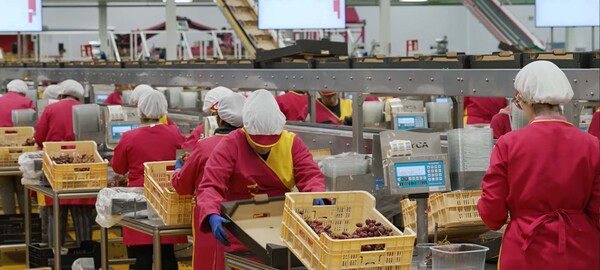
Suddenly, you have 150 people on the line collecting wages without working, field trucks queuing under the sun, and worst of all, perishable fruit losing quality and commercial value every minute that passes. Maintenance is not an "expense", it is your life insurance policy.
It is 11:00 AM. Peak export season. Suddenly, a sharp metallic noise is heard and then... total silence. A drive chain on the main sizer broke.
The Real Cost Impact (1 Hour of Downtime in the US):
- 📉 Dead Payroll: 150 workers x ~$18 USD/hr (w/ burden) = $2,700 USD wasted.
- 📉 Lost Quality: 5 trucks of berries/stone fruit waiting without pre-cooling = Reduced shelf life.
- 📉 Commercial Penalty: The Costco/Kroger order doesn't leave on time. Penalty for "Shorting the Order" or rejection.
- 📉 Emergency Costs: Overnight Air Freight for the spare part or paying premium rates for a tech.
Beyond "fixing metal": OEE and Efficiency
The problem with most Maintenance Managers is that they are excellent "firefighters", but poor strategists. Their pride is fixing the machine fast when it breaks. The goal should be that it never breaks.
ERPagro introduces the concept of Overall Equipment Effectiveness (OEE). It is not enough for the machine to turn on; it has to operate at 100% of its capacity. If your 15 tons/hour sizer is processing only 10 because "it's not calibrated", you are losing 33% of your installed capacity.
[Image of OEE Calculation formula]The "Quick Fix" Culture vs. Professional Maintenance
In the agro-industry, it is common to see machines repaired with wires, duct tape, or "bailing wire fixes" that stay there forever. This is a cancer for productivity.
A poorly adjusted or "patched" machine consumes more electricity (increasing your bill) and wears out other parts prematurely. ERPagro forces you to formalize every intervention via a CMMS (Computerized Maintenance Management System):
- ❌ Reactive Maintenance: "Run, the line stopped!".
- ✅ Preventive Maintenance: "Oil change is due Friday at 3 PM, rain or shine".
- ✅ Predictive Maintenance: "IoT Sensors indicate abnormal vibration, let's check before it fails".
The Spare Parts Warehouse: Your Life Insurance
The missing part is always the import one
Many line stoppages last 6 hours not because of the complexity of the repair (which takes 20 minutes), but because "we forgot to order the bearing from Germany/Italy". Supply chain delays are real.
With the ERPagro Industrial Maintenance module, you manage critical spare parts stock with surgical precision:
- ✅ Minimum Stock Alerts: The system automatically notifies the Purchasing Manager before you run out of sensors, belts, or special lubricants.
- ✅ Exact Location: The mechanic knows exactly which aisle, bin, and shelf the part is in. Zero time lost searching.
- ✅ Failure History: "Why does this belt break every 2 months?" The system gives you statistics to find the root cause.
Maintenance is Food Safety (FSMA)
Audit Warning: A poorly maintained machine is a contamination risk. Grease dripping on fruit, rust on belts, or loose metal parts are grounds for immediate failure in a PrimusGFS, SQF, or BRC audit.
ERPagro allows you to track the materials used. You can prove to the auditor that the lubricant used on the conveyor chain was Food Grade (H1) and that cleaning was performed according to protocol. Maintenance stops being a mechanical issue and becomes a Food Safety Compliance issue.
The End of the "Paper Work Order"
In many plants, the machine operator yells "Maintenance!!" and waits for someone to appear. With the ERPagro Maintenance App (See Demo), the flow becomes 100% digital:
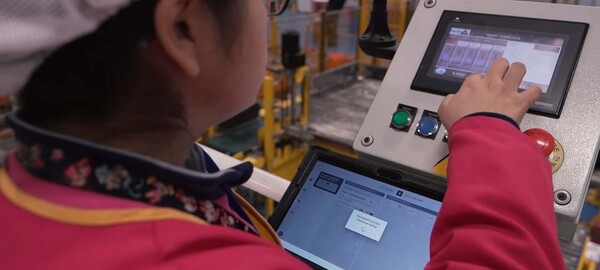
- Report: The operator reports an anomaly (vibration or strange noise) from the line's touchscreen.
- Assignment: The Maintenance Manager receives the alert on their phone and assigns it to the nearest specialist tech.
- Intervention: The technician arrives, scans the machine's QR code, views the manual in PDF on their tablet, and registers the part change in real-time.
- Closure: The machine is marked as "Available" again in the system so Production can resume.
Field vs. Packinghouse Maintenance
| Feature | Field Machinery (Tractors) 🚜 | Packinghouse Machinery (Lines) 🏭 |
|---|---|---|
| Failure Impact | Local (One block is delayed) | Critical (Entire plant stops) |
| Repair Window | Days or Hours | Minutes (Maximum Urgency) |
| Spare Part Type | Mechanical (Tires, filters) | Electronic (Sensors, PLCs, VFDs) |
| Stoppage Cost | High | Extreme (Loss of Market + Labor) |
Frequently Asked Questions about Industrial Maintenance
Yes, we have IoT (Internet of Things) integration capabilities. We can read direct signals from modern machines (like MAF, Compac, or Unitec sizers) to register automatic stops, speeds, and count production in real-time without human intervention (SCADA integration).
Totally. Audits (PrimusGFS, SQF, BRC) require proof that maintenance did not contaminate the product. ERPagro's digital history is your best documentary evidence before the auditor.
May your packinghouse never stop
Manage your industrial assets, control your critical spare parts, and maximize your OEE with ERPagro.
Industrial Maintenance Demo